How can we prevent secret audio recordings without disabling authorized ones? And can existing cameras localize passive objects without RFID infrastructure? Our two SenSys papers explore these questions.
After a rigorous shepherding process, our two papers were accepted by the 18th ACM Conference on Embedded Networked Sensor Systems (SenSys 2020): Patronus: Preventing Unauthorized Speech Recordings with Support for Selective Unscrambling and LiTag: Localization and Posture Estimation with Passive Visible Light Tags.
Patronus: Selective speech privacy
The widespread adoption of smart devices equipped with microphones creates significant privacy risks. Patronus addresses unauthorized recording by emitting ultrasonic noise that is inaudible to humans but is captured by commercial off-the-shelf microphones through nonlinear effects.
The system scrambles recordings made by unauthorized devices while allowing authorized devices to remove the scrambling noise using a pattern received over Wi-Fi or Bluetooth. This provides selective unscrambling rather than indiscriminate audio jamming.
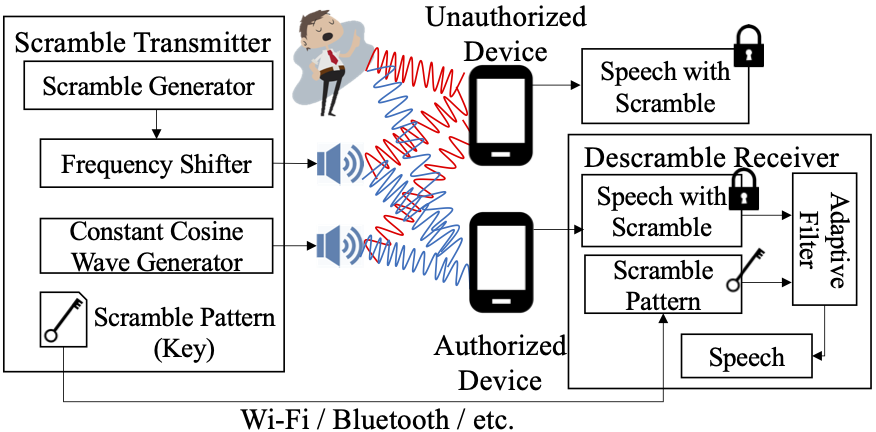
The TPC summary noted: “The paper has been discussed deeply at the TPC meeting. The TPC members liked the idea of leveraging the nonlinear effects of microphones to prevent unauthorized recordings and allowing authorized ones.”
LiTag: Passive visible-light tags
LiTag is a complementary technology to RFID for item identification, positioning, and posture estimation. It uses a single surveillance camera and passive visible-light tags, avoiding the need to deploy dedicated RFID antennas and readers.
LiTag leverages birefringence to display different colors at different observation angles. After capturing a tag, the system extracts its color sequence, estimates the camera’s position relative to the tag, and then derives the tag’s position and posture through geometry.
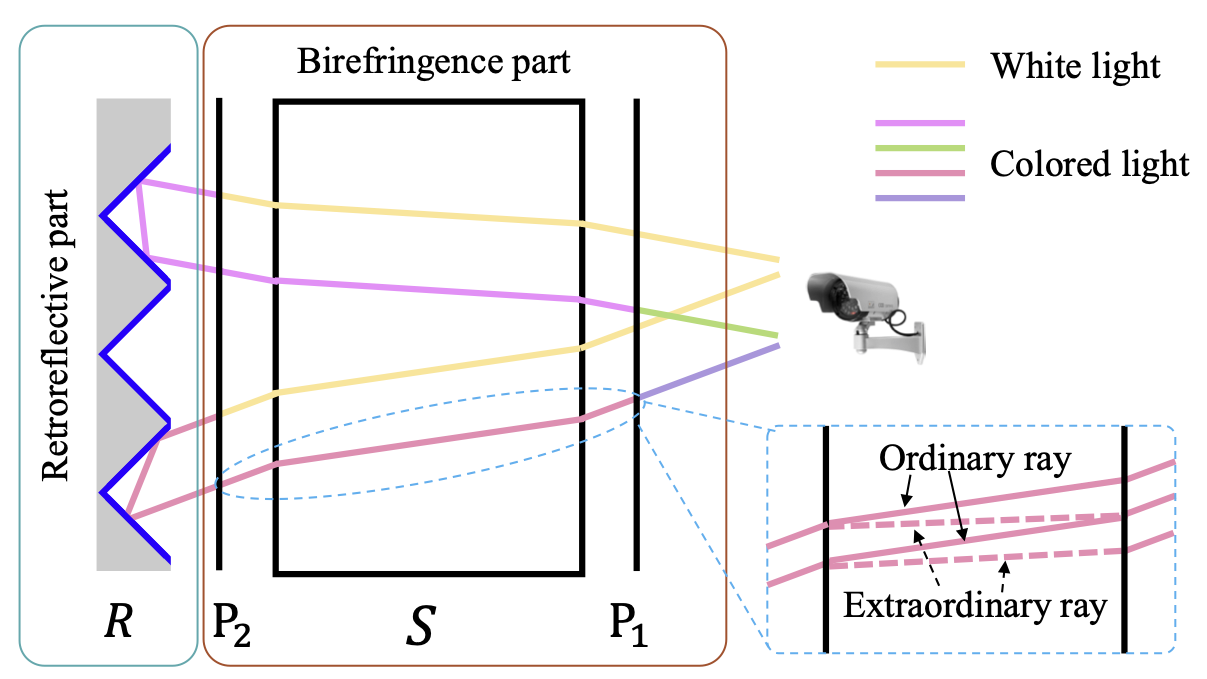
The TPC shepherd commented: “This is indeed an early attempt in its genre. Exciting potential challenges remain that need to be resolved. They demonstrate the rich potential for future work and extensions in the area.”
About ACM SenSys 2020
The 18th ACM Conference on Embedded Networked Sensor Systems is a selective, single-track forum for research on sensors and sensor-enabled smart systems. Due to the COVID-19 pandemic, the 2020 conference was held online.